
Best Natural Supplements for Erectile Dysfunction in 2026
Erectile dysfunction (ED) is one of the most searched — and most marketed-to — health topics online. Type “natural ED supplement” into Google and you’ll find hundreds of near-identical review sites, many of them affiliate pages recycling the same manufacturer copy, complete with suspiciously precise “satisfaction scores” and 9-out-of-10 ratings that no one can actually verify.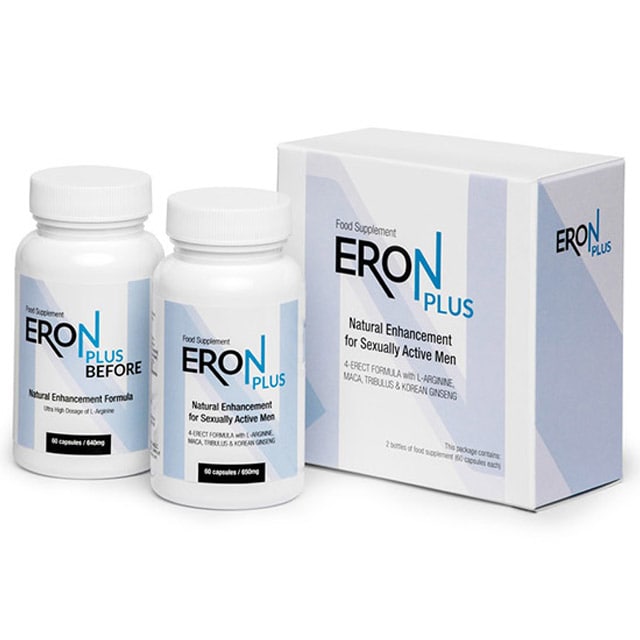
This piece skips the marketing language and asks a narrower question: what does the actual clinical research say about these ingredients, and how much of that evidence applies to a product like Eron Plus specifically?
What Erectile Dysfunction Actually Is
ED is the persistent, recurring inability to get or keep an erection firm enough for satisfactory sex. Occasional trouble isn’t ED — it becomes clinically relevant when it’s a pattern.It’s rarely just “a bedroom problem.” Common contributors include:
•Vascular health — an erection depends on adequate blood flow, so anything affecting blood vessels (atherosclerosis, high blood pressure, high cholesterol) can affect erections too
•Hormones — low testosterone can reduce both desire and function in some men
•Nerve function — conditions like diabetes or neurological disease can damage the nerves involved in triggering an erection
•Psychological factors — stress, anxiety, depression, and performance anxiety
•Lifestyle — smoking, inactivity, obesity, and heavy alcohol use
Because ED can be an early warning sign of cardiovascular or metabolic disease, persistent cases are worth a medical evaluation — not just a supplement.
Does the Evidence Support “Natural” ED Supplements? It Depends on the Ingredient
European Association of Urology guidance acknowledges that evidence for most herbal ED supplements is weak, but it does note that daily L-arginine or ginseng can be a reasonable option for men with mild ED who prefer not to use prescription medication — with the caveat that any benefit tends to be modest. That’s a useful baseline for judging any specific product, including Eron Plus.
L-arginine: the strongest evidence in the formula
L-arginine is an amino acid the body converts into nitric oxide, a molecule that relaxes blood vessels and improves blood flow — the same physiological pathway that PDE5-inhibitor drugs like sildenafil act on, though far less potently.
A meta-analysis of 10 randomized controlled trials covering roughly 540 men found that L-arginine supplementation, at doses of 1,500–5,000 mg per day, improved erectile-function scores compared with placebo in men with mild-to-moderate ED. A separate double-blind, placebo-controlled trial using a higher dose (6 g/day for three months) also found significant improvement in erectile function scores, most clearly in men with mild-to-moderate vasculogenic ED rather than severe cases.
Among the five Eron Plus ingredients, L-arginine has the most direct, dose-specific clinical support.
Worth noting: L-citrulline — a related amino acid that the body also converts to arginine — has shown similar or better results in some trials with less risk of the GI side effects arginine can cause at high doses. It isn’t in the Eron Plus formula, but it’s one of the better-supported alternatives if you’re comparing options.
Korean red ginseng: promising, but modest and uncertain
Ginseng is one of the more researched herbal ingredients for ED specifically. A Cochrane systematic review pooling nine trials and 587 men found that ginseng improved men’s self-reported ability to have intercourse, but its effect on validated erectile-function scores was small, and the certainty of the evidence was rated low. An earlier, separate meta-analysis of seven trials (about 349–370 men) found a larger effect, but flagged that the underlying trials were, on average, methodologically weak.
Read together: ginseng likely does something, but “modest effect, low-certainty evidence” is the honest summary — not a guaranteed fix.
Maca, Tribulus terrestris, and fenugreek: weaker, less specific evidence
These three show up constantly in male-vitality formulas, but the research doesn’t single them out for treating ED specifically:•Maca has more evidence tied to libido and general sexual satisfaction than to erectile function or blood flow itself.
•Tribulus terrestris results are inconsistent across studies, and its reputation as a testosterone booster is not well supported by controlled trials.
•Fenugreek has some data on libido and testosterone in specific contexts (often exercise-related), but not strong, dedicated ED trial evidence.
They’re reasonable “supporting cast” ingredients in a formula. They are not, on current evidence, treatments for erectile dysfunction in their own right.
Where Eron Plus Specifically Gets Shakier
This is the part most reviews skip.Ingredient evidence is not the same as product evidence. Knowing that L-arginine works at 1,500–5,000 mg/day only tells you something useful if you know how much L-arginine is actually in Eron Plus.
Be skeptical of the review ecosystem itself. A large share of the content ranking for “Eron Plus reviews” is affiliate marketing — pages reproducing manufacturer claims (like an “85% positive sentiment” figure) without any disclosed methodology, sample size, or independent source. A satisfaction statistic from a company’s own marketing is not clinical evidence, and there’s no publicly available independent trial testing the finished Eron Plus product itself, as opposed to its individual ingredients.
No independent third-party testing is publicly listed, which is common for supplements in this category but still worth knowing — it means there’s no independent confirmation that the label matches what’s in the capsule.
None of this means the product “doesn’t work.” It means the honest position is: some of its ingredients have real evidence behind them, at the ingredient level, at specific doses — and there’s no strong, independent evidence for the finished product as a whole.
Supplements vs. Prescription Treatment
Prescription PDE5 inhibitors (sildenafil, tadalafil, and similar drugs) have decades of large-scale randomized trial data behind them and remain the first-line medical treatment for most men with ED. Natural supplements, even the better-studied ones like L-arginine and ginseng, show smaller, less consistent effects in comparison. A supplement is reasonably framed as a lower-intensity option for mild ED or as an adjunct — not a substitute for medical treatment, especially for moderate-to-severe ED or ED with a clear underlying cause.
What Actually Moves the Needle Alongside (or Instead of) Supplements
Because ED is so closely tied to cardiovascular and metabolic health, lifestyle changes have real evidence behind them too:•Regular aerobic exercise
•Maintaining a healthy weight
•Quitting smoking
•Limiting alcohol
•Managing blood pressure, cholesterol, and blood sugar
•Addressing sleep and stress
•Treating anxiety or depression if present
For a lot of men, these factors matter as much as — or more than — any supplement.
Is Eron Plus Worth It in 2026?
Eron Plus combines one ingredient with genuinely useful clinical evidence for mild-to-moderate ED (L-arginine), one with modest but real evidence specifically in ED trials (Korean red ginseng), and three ingredients (maca, Tribulus, fenugreek) with weaker or more general evidence for libido and vitality rather than erectile function itself.That makes it a plausible supportive option for a man with mild ED who wants to try a natural approach first — provided he goes in with realistic expectations and ideally talks to a doctor first, especially if he’s on other medications or has cardiovascular risk factors. It is not a substitute for medical evaluation, and it’s not equivalent to prescription ED treatment.
If ED is new, worsening, or persistent, that’s a reason to see a doctor.
Frequently Asked Questions
At doses of 1,500–5,000 mg/day, clinical trials show measurable improvement in erectile function for men with mild-to-moderate ED. It’s one of the better-supported natural options.
Generally, no. The best-supported ingredients show modest improvement, not a cure — and results depend heavily on the underlying cause of a man’s ED.
Not always, but persistent ED can be an early marker of cardiovascular, metabolic, hormonal, or neurological problems, which is why it’s worth medical evaluation rather than self-treating indefinitely.
Likely a modest benefit, according to a Cochrane review of nine trials — but the certainty of the evidence is low, and effects on objective erectile-function scores were small.
Anyone on blood pressure medication, blood thinners, or nitrates (arginine can interact seriously with nitrates);
Anyone with diabetes or on blood-sugar-lowering medication (ginseng and fenugreek can compound the effect);
Anyone with a thyroid condition;
Anyone with a peanut/legume allergy (because of fenugreek);
And anyone with a recent heart attack or unstable cardiovascular disease.
There’s no independent safety data on the finished Eron Plus product itself, so the honest answer comes from what’s known about each ingredient individually
•L-arginine — the most common issues are gastrointestinal: bloating, nausea, diarrhea, stomach cramping, especially at higher doses. Less commonly, it can lower blood pressure and, rarely, trigger an allergic reaction.
•Korean red ginseng — can cause insomnia, headache, or GI upset. It may also lower blood sugar and has mild estrogen-like activity in some studies.
•Fenugreek — commonly causes GI discomfort and a distinctive body/urine odor (often described as smelling like maple syrup). It can lower blood sugar and should be avoided by people with peanut or chickpea allergies due to cross-reactivity.
•Tribulus terrestris — generally reported as mild GI upset in the limited human data available; long-term human safety data is thin.
•Maca root — usually well tolerated, but people with thyroid conditions (especially Hashimoto’s) are sometimes advised to be cautious with high intakes.
Not without checking first. The interaction risk isn’t really about Eron Plus as a brand — it’s about the individual ingredients (arginine and ginseng in particular) interacting with blood pressure drugs, blood thinners, diabetes medication, and nitrates. Bring the full ingredient list to a pharmacist or doctor before combining it with anything you’re currently prescribed.
Eron Plus combines one ingredient with genuinely useful clinical evidence for mild-to-moderate ED (L-arginine), one with modest but real evidence specifically in ED trials (Korean red ginseng), and three ingredients (maca, Tribulus, fenugreek) with weaker or more general evidence for libido and vitality rather than erectile function itself.
That makes it a plausible supportive option for a man with mild ED who wants to try a natural approach first — provided he goes in with realistic expectations and talks to a doctor first, if he’s on other medications or has cardiovascular risk factors. It is not a substitute for medical evaluation, and it’s not equivalent to prescription ED treatment.
That makes it a plausible supportive option for a man with mild ED who wants to try a natural approach first — provided he goes in with realistic expectations and talks to a doctor first, if he’s on other medications or has cardiovascular risk factors. It is not a substitute for medical evaluation, and it’s not equivalent to prescription ED treatment.
Longer than most product pages imply. Positive L-arginine trials typically ran 4–12 weeks before measuring results — it’s a cumulative effect, not a same-night one like a PDE5 inhibitor. Ginseng trials showing benefit ran 8 weeks or longer, with a small effect even then. Maca, Tribulus, and fenugreek have less consistent timelines, and what they measure is often libido rather than erectile function itself. If anything, a slow, modest trajectory is the realistic expectation.